The Complete Damp Treatment Guide for London Properties
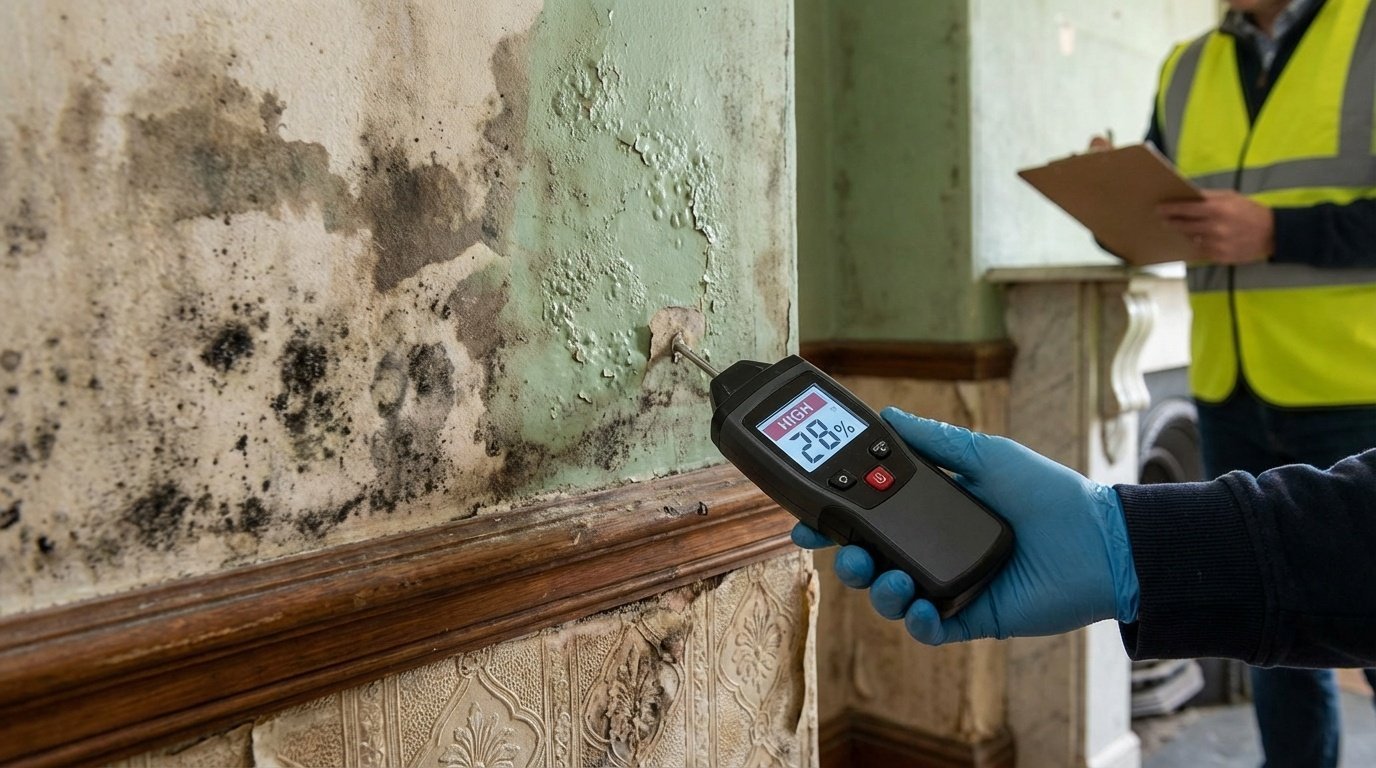
Introduction: Understanding Damp in London Properties
Damp is one of the most common and concerning issues affecting properties across West End London. In our experience as RICS surveyors, approximately 40% of period properties we survey show evidence of damp-related problems—from minor condensation issues to severe rising damp requiring extensive treatment.
The unique characteristics of London's older housing stock make damp particularly prevalent. Victorian and Georgian buildings constructed with solid brick walls lack modern damp-proof courses, while basement conversions in clay soil areas face ongoing water ingress challenges. Add London's humid climate and the problem becomes clear: damp affects property values, structural integrity, and occupant health.
This comprehensive guide provides everything property owners and buyers need to know about identifying, treating, and preventing damp in West End London properties.
The Three Types of Damp
1. Rising Damp
Rising damp occurs when ground moisture rises through porous building materials via capillary action. Properties built before 1875 typically lack damp-proof courses (DPC), allowing water to travel upward through brick and masonry.
Identifying Rising Damp:
- Damp patches on walls starting at ground level and rising up to 1-1.5 meters
- Horizontal 'tide marks' showing the extent of moisture penetration
- White salt deposits (efflorescence) on wall surfaces
- Decaying skirting boards and deteriorating plaster
- Musty odors, particularly in ground floor rooms
- Peeling wallpaper and paint at lower wall levels
Causes:
- Absent or failed damp-proof course in period properties
- Ground levels raised above DPC level
- Bridging of DPC by render, paths, or soil
- DPC breakdown in properties over 80 years old
Treatment Costs:
Chemical DPC injection: £50-£80 per linear meter | Physical DPC installation: £80-£120 per linear meter | Full treatment including re-plastering: £3,000-£8,000 for typical terraced house
2. Penetrating Damp
Penetrating damp results from water ingress through external walls, roofs, or windows. Unlike rising damp which affects lower wall areas, penetrating damp can occur at any level and often worsens during periods of heavy rainfall.
Identifying Penetrating Damp:
- Damp patches appearing after heavy rain
- Staining on walls, especially around windows and chimneys
- Deteriorating internal plaster
- Damp patches on ceilings (roof leaks)
- Black mold growth on affected areas
- Rotting window frames or external joinery
Common Causes:
- Roof defects: Missing slates/tiles, failed flashings, blocked gutters
- Wall problems: Deteriorated pointing, cracked render, porous brickwork
- Window issues: Failed seals, damaged frames, inadequate weatherproofing
- Chimney problems: Defective flaunching, damaged pots, missing cowls
- Parapet gutters: Blocked or failed concealed guttering systems
- Rainwater goods: Leaking gutters, broken downpipes, inadequate drainage
Treatment Costs:
Minor repairs: £500-£2,000 | Repointing: £40-£80 per square meter | Roof repairs: £2,000-£15,000+ | Major external works: £5,000-£25,000+
3. Condensation
Condensation is the most common form of damp in modern properties, caused by moisture-laden air cooling and depositing water droplets on cold surfaces. While less structurally serious than rising or penetrating damp, condensation causes mold growth and health issues.
Identifying Condensation:
- Water droplets on windows, especially mornings
- Black mold growth in corners and on north-facing walls
- Musty odors in poorly ventilated rooms
- Mold on bathroom ceilings and around showers
- Problems worse in winter months
- Affects cold surfaces (single-glazed windows, external walls)
Causes:
- Inadequate ventilation (sealed properties, blocked vents)
- High moisture generation (cooking, bathing, drying clothes indoors)
- Poor heating (cold surfaces promote condensation)
- Thermal bridging (cold spots in insulation)
- Lifestyle factors (excessive indoor moisture without ventilation)
Treatment Costs:
Improved ventilation (extractors): £200-£800 per room | PIV system: £800-£1,500 | Secondary glazing: £800-£1,500 per window | Insulation improvements: £2,000-£10,000
Professional Damp Surveys
Accurate damp diagnosis requires professional expertise. Our RICS surveyors use specialized equipment and decades of experience to identify damp sources and recommend appropriate treatments.
Survey Methods:
- Visual inspection: Identifying visible signs of damp, staining, and deterioration
- Moisture meters: Electronic measurement of moisture content in walls, floors, and timbers
- Thermal imaging: Infrared cameras revealing hidden moisture and thermal bridging
- Calcium carbide testing: Laboratory-accurate moisture content measurement
- Salt analysis: Determining whether salts indicate rising damp or other causes
Why Professional Surveys Matter:
Many damp problems are misdiagnosed, leading to inappropriate and expensive treatments that fail to resolve issues. Common misdiagnoses include:
- Condensation treated as rising damp (unnecessary DPC installation)
- Plumbing leaks identified as penetrating damp
- Hygroscopic salts causing persistent moisture readings after damp resolution
- Failed tanking diagnosed as rising damp
RICS surveyors provide independent, unbiased assessments—we have no financial interest in recommending expensive treatments.
Damp Treatment Solutions
Rising Damp Treatments
Chemical Damp-Proof Course Injection
The most common treatment involves injecting water-repellent chemicals into drilled holes along the mortar bed. The chemicals form a barrier preventing moisture rise.
Process: Drill holes every 100-150mm, inject cream/liquid silicone DPC, re-plaster affected walls with salt-resistant render
Effectiveness: 15-30 year guarantees when installed correctly
Cost: £50-£80 per linear meter plus re-plastering
Physical Damp-Proof Course Installation
Traditional method involving cutting through walls and inserting physical barriers (slate, plastic, or metal membranes).
Pros: Permanent solution, highly effective
Cons: Disruptive, expensive, requires structural care
Cost: £80-£120 per linear meter
Electro-Osmotic Systems
Specialized systems using electrical fields to repel moisture. Suitable for sensitive historic buildings where chemical injection is inappropriate.
Cost: £2,000-£6,000 depending on property size
Penetrating Damp Treatments
External Repairs
Addressing source issues:
- Repointing: Rake out deteriorated mortar, repoint with breathable lime mortar (£40-£80/m²)
- Render repair: Remove defective render, apply breathable systems (£50-£100/m²)
- Roof repairs: Replace slates, renew flashings, clear gutters (£2,000-£15,000+)
- Window restoration: Repair timber frames, improve weatherproofing (£800-£2,000 per window)
Cavity Wall Treatments
For properties with cavity walls, installing cavity trays and clearing blocked cavities prevents water bridging.
Cost: £1,500-£5,000 depending on extent
Condensation Solutions
Ventilation Improvements
- Extractor fans: Bathroom and kitchen extraction (£200-£500 each)
- Trickle vents: Window vents allowing background ventilation (£50-£100 per window)
- PIV systems: Positive Input Ventilation from loft (£800-£1,500)
- MVHR: Mechanical Ventilation with Heat Recovery (£4,000-£8,000)
Thermal Improvements
- Secondary glazing: Reduces cold surfaces (£800-£1,500 per window)
- Internal wall insulation: Raises surface temperatures (£50-£100/m²)
- Heating upgrades: Improved heating reduces condensation risk
Basement Damp and Tanking
Basement conversions present unique damp challenges in London's clay soil areas. Below-ground rooms are inherently vulnerable to water ingress and require specialized waterproofing.
Basement Waterproofing Options
Type A: Barrier Protection (Tanking)
Waterproof membranes applied to walls and floors create impermeable barriers.
Materials: Cementitious renders, bituminous coatings, plastic membranes
Cost: £50-£120 per square meter
Limitation: Any breach compromises entire system
Type B: Structurally Integral Protection
Concrete walls designed to resist water penetration through density and chemical additives.
Best for: New-build basements
Cost: £80-£150 per square meter
Type C: Drained Cavity Systems
Cavity drainage membranes allow water ingress but channel it to sump pumps for removal.
Components: Cavity membranes, drainage channels, sump pump systems
Cost: £100-£200 per square meter including pumps
Advantage: Most reliable for period basement conversions
Basement Tanking Costs
Small basement (30m²): £8,000-£15,000 | Medium basement (60m²): £15,000-£30,000 | Large basement (100m²): £25,000-£50,000+
Breathable vs. Non-Breathable Materials
Period properties require breathable materials that allow moisture vapor to escape. Using modern non-breathable materials traps moisture and exacerbates damp problems.
Appropriate Materials for Period Properties:
- Lime mortars and plasters: Allow vapor permeability
- Lime wash paints: Breathable decoration
- Clay paints: Natural, breathable alternatives
- Breathable membranes: For insulation systems
Materials to Avoid:
- Cement renders on solid walls
- Vinyl wallpapers
- Non-breathable paints (except in tanked basements)
- Impermeable floor coverings over solid floors
Guarantees and Insurance
Treatment Guarantees
Reputable damp specialists provide insurance-backed guarantees:
- Chemical DPC: 20-30 year guarantees
- Basement tanking: 10-20 year guarantees
- Timber treatment: 10-30 year guarantees
Important Considerations:
- Guarantees only valid if recommended maintenance performed
- Insurance-backed guarantees transfer to future owners
- Some mortgage lenders require guarantees for significant damp work
- Check guarantee provider credentials and financial stability
Prevention and Ongoing Maintenance
Regular Maintenance Tasks:
- Clear gutters and downpipes twice annually (spring and autumn)
- Inspect external walls for repointing needs every 3-5 years
- Maintain ground levels below DPC
- Ensure adequate ventilation in all rooms
- Check roof condition annually, particularly after storms
- Maintain heating to prevent condensation
- Service mechanical ventilation systems annually
Lifestyle Factors:
- Ventilate when cooking and bathing
- Avoid drying clothes indoors without ventilation
- Keep lids on saucepans when cooking
- Don't block air vents
- Maintain consistent heating levels
When to Seek Professional Help
Contact West End Surveyors if you notice:
- Persistent damp patches despite ventilation improvements
- Tide marks or salt deposits on walls
- Musty odors that won't dissipate
- Black mold growth
- Deteriorating plaster or decorations
- Timber decay or softening
- Damp worsening after rainfall
Our RICS surveyors provide independent damp assessments, identifying root causes and recommending cost-effective solutions. We coordinate with specialist contractors when treatment is required and provide ongoing monitoring services.
Conclusion: Effective Damp Management
Damp is manageable when correctly diagnosed and appropriately treated. Success requires accurate identification of damp type, addressing underlying causes rather than symptoms, using appropriate materials for property type, and maintaining properties to prevent recurrence.
Don't accept damp as inevitable in period properties—with professional expertise and proper treatment, West End London properties can be kept dry, healthy, and structurally sound for generations to come.
Concerned About Damp in Your Property?
Contact West End Surveyors for professional damp surveys and expert treatment recommendations. Our RICS surveyors provide independent assessments and practical solutions.
Book a Damp Survey